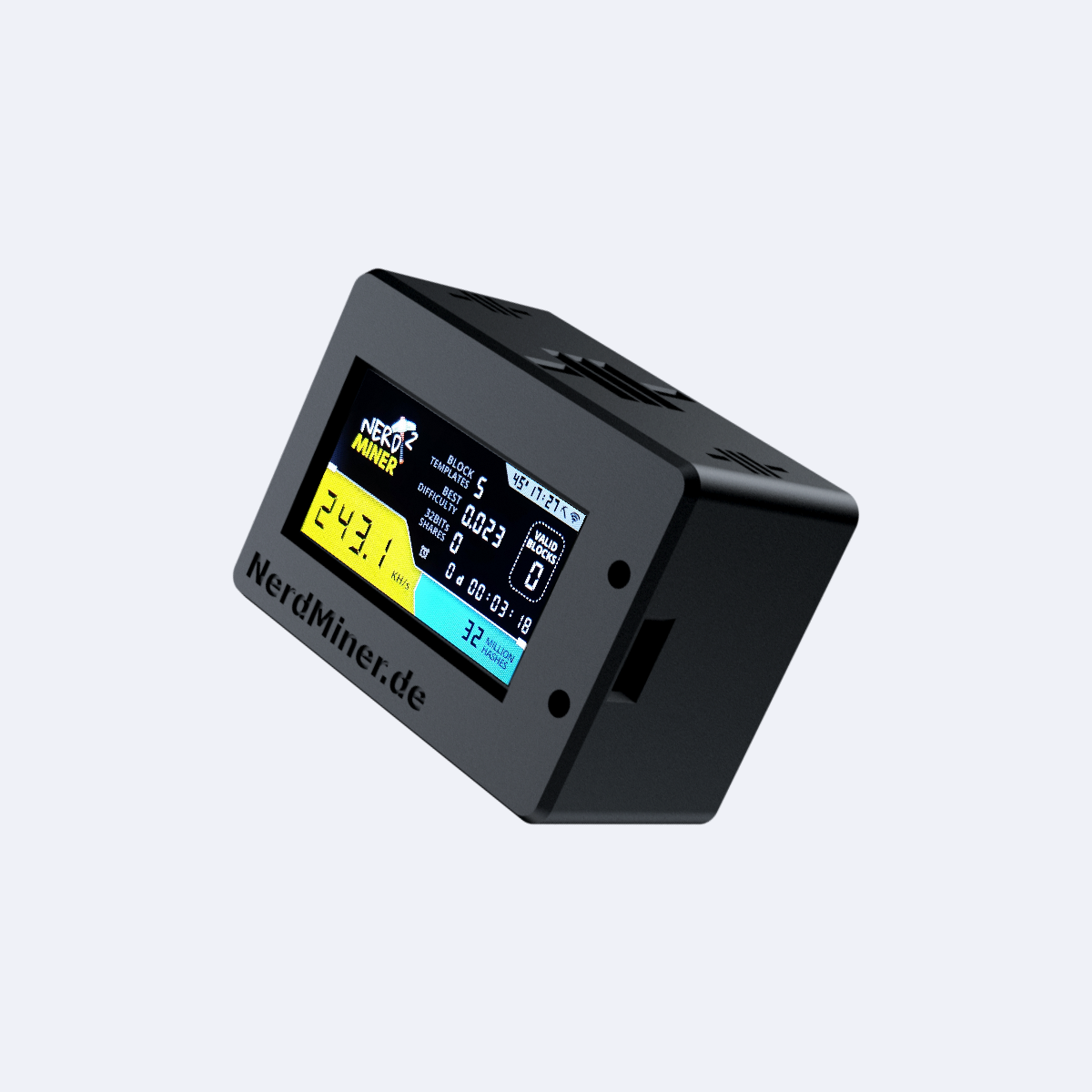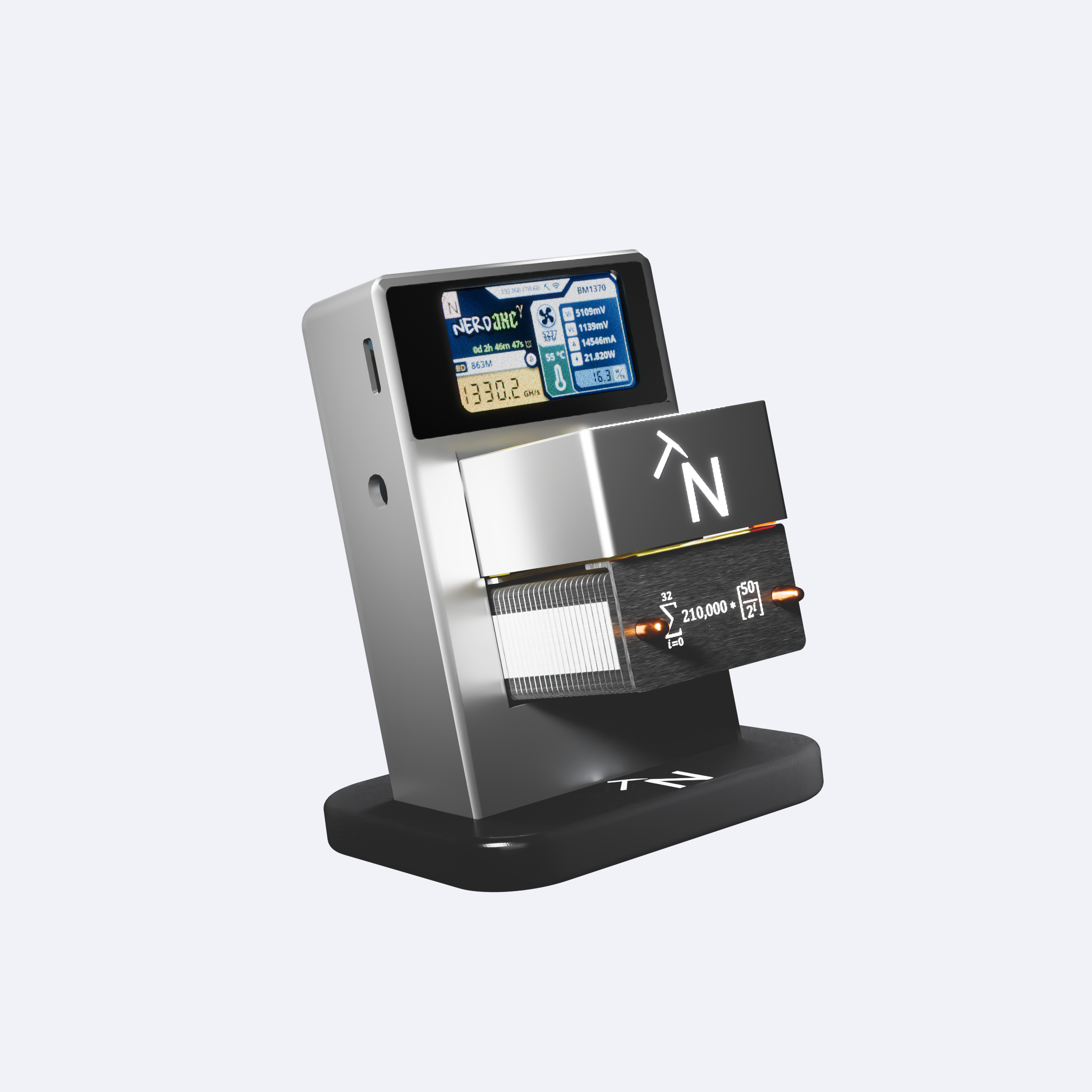



NerdAxe Gamma Metal Editon

Shop this look


Shop this look

Shop this look

Shop this look

Der perfekte Einstieg in die Bitcoin Welt


Trusted by Creators

"Der NerdAxe überzeugt mit seiner Plug-and-Play Lösung und seiner kaum hörbaren Lautstärke, sodass er perfekt für den Schreibtisch geeignet ist."
"Der NerdAxe überzeugt mit seiner Plug-and-Play Lösung und seiner kaum hörbaren Lautstärke, sodass er perfekt für den Schreibtisch geeignet ist."
derHelper
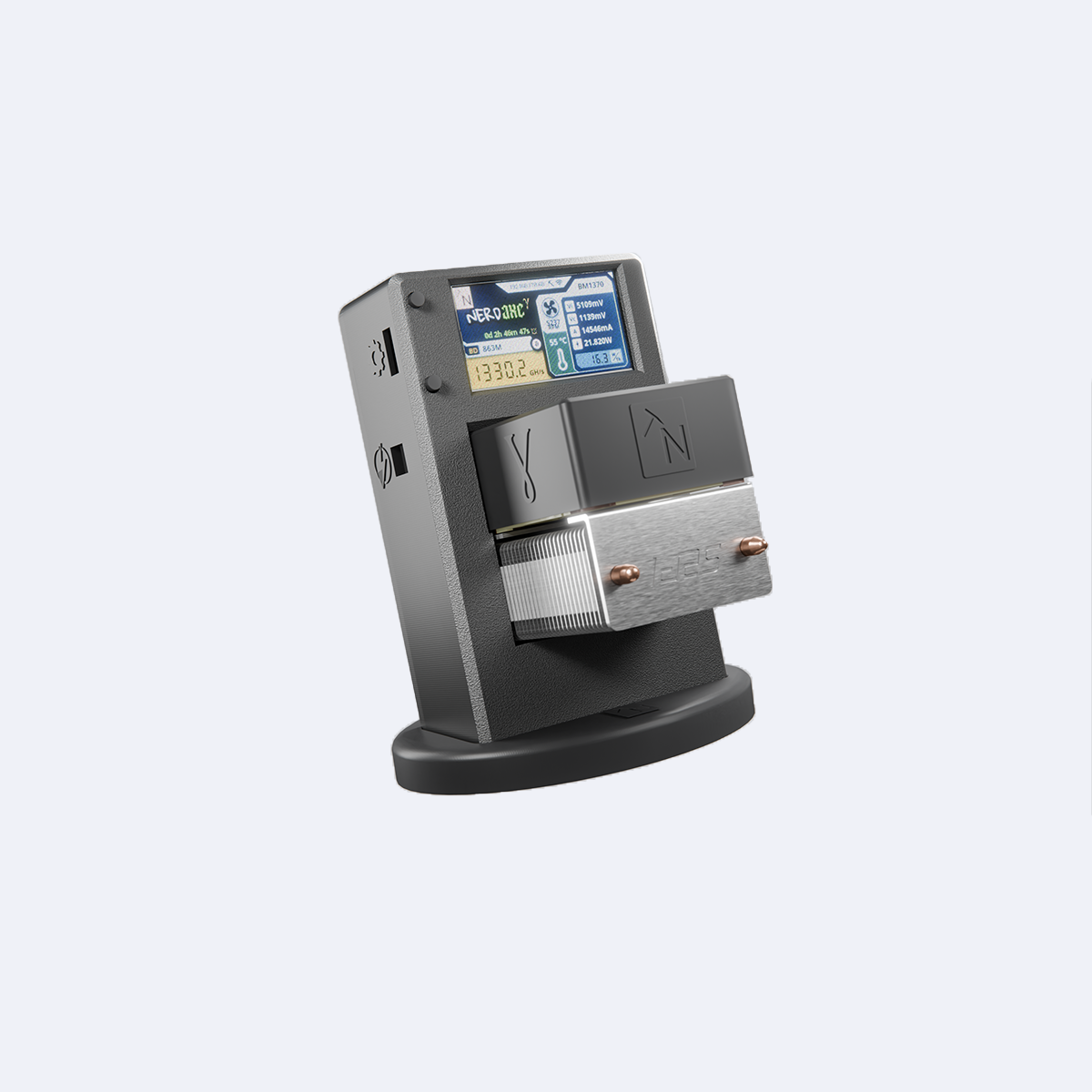
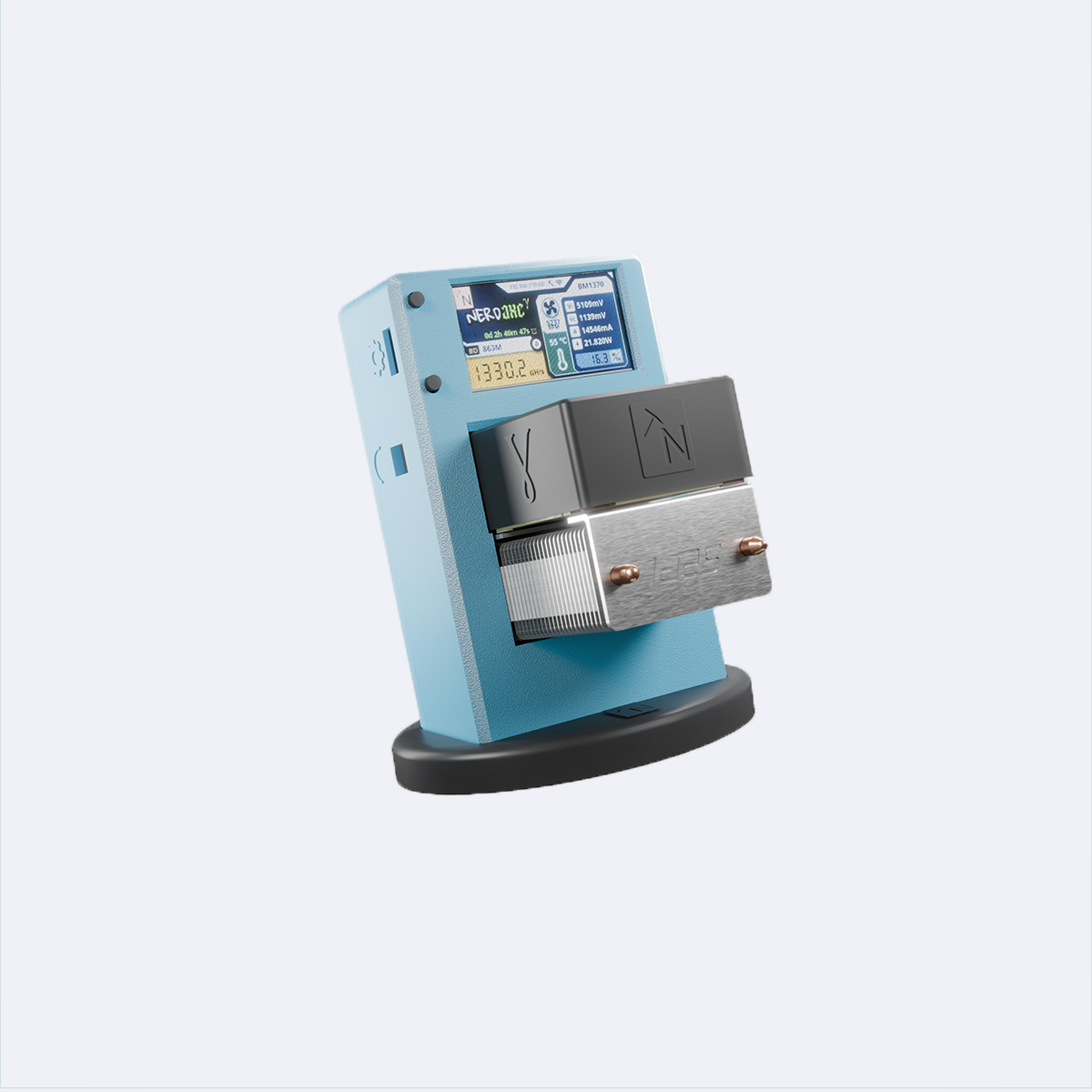

Die Fullnode – Der Guardian deiner finanziellen Souveränität
Mit der neuen Metal Edition setzt du ein Statement: maximale Sicherheit, maximale Langlebigkeit, maximal deine.


Dein Bitcoin-Miner für zu Hause

Vendor: Nerdminer.de
Type:
NerdNOS - the world novelty with 80GH/s
World first & extreme performance boost! Now even more Nerdminer power with the NerdNOS thanks to S17 ASIC chip tuning.
With its 80GH/s, the NerdNOS is ~1 million times more powerful than its little brother, the Nerdminer. With its simple installation and plug-in-and-get-ready function, it is ideal for getting to know the Bitcoin mining process better.
Bitcoin lottery mining for everyone - easier than ever!
- Original LILYGO T-Display S3 1.9” IPS Fullcolor
- 4 different modes
- max. 8 Watt power consumption (20 Euro electricity costs/year)
- Hashrate min. 80GH/s
- Noctua fan (ultra quiet)
- Dimensions: 85x65x62mm
- Weight: 114 gram

Vendor: Nerdminer
Type:
GIGA Nerdminer 2.0
In 5 minutes you can become a Bitcoin miner without any prior knowledge!
The new "Giga" Nerdminer has four 2.8" displays on which all four dashboards can be displayed at the same time. This not only increases the performance of your small Bitcoin mining farm fourfold, but also increases the chance of a valid block find.
Bitcoin lottery mining for everyone - easier than ever!
Facts:
- Nerdminer 4x2.8" display
- Touch screen
- 4 different modes can be displayed at the same time
- max. 4 watts power consumption (< 5 euros electricity costs/year)
- Hashrate ≈ 221 KH/S
- Dimensions: 179mm x 134mm x 30mm
- Weight: 282 grams
- completely silent
- ideal for your desk

Vendor: Nerdminer
Type:
Nerdminer
You can become a Bitcoin miner in 5 minutes without any prior knowledge!
The Nerdminer 1.9" is an absolute eye-catcher for all Bitcoin fans and those who will become one.
Bitcoin lottery mining for everyone - easier than ever!
Facts:
- Nerdminer 1.9"
- 4 different modes
- Max. 1.6 watts power consumption ( < 3 euros electricity costs/year )
- Hashrate ≈ 78 KH/S
- Classic dimensions: 51mm x 66mm x 41mm
- Dimensions 14°: 60mm x 66mm x 41mm
- Weight: 60 grams
- Silent fan 15dB

Vendor: Nerdminer
Type:
Nerdminer 2.8“
The trend product of the year in the Bitcoin space: With the plug-in-and-get-started function, it is ideal for getting to know the Bitcoin mining process.
You can become a Bitcoin miner in 5 minutes without any prior knowledge!
The Nerdminer 2.8" has a larger screen than its little brother, making it an absolute eye-catcher for all Bitcoin fans and those who are yet to become one.
Bitcoin lottery mining for everyone - easier than ever!
Facts:
- Nerdminer 2.8" in Smart TV design
- Touch screen
- 4 different modes
- Max. 1.6 watts power consumption ( < 3 euros electricity costs/year )
- Hashrate ≈ 55 KH/S
- Dimensions: 96mm x 91mm x 28mm
- Weight: 86 grams
- Completely silent
- ideal for your desk

Vendor: Nerdminer.de
Type: Fullnode
Fullnode
Protect your privacy online and have 100% control over your own money.
As an integral part of the Bitcoin network, your full node gives you full control over your Bitcoin transactions. It serves as a hub that allows you to bring the Bitcoin blockchain to your home. By incorporating the latest technology, such as the Raspberry Pi 5, you are optimally equipped for the next few years with this full node.
Not your node, not your rules.
Components:
Raspberry Pi 5 8GB
Raspberry Pi Active Cooler
Raspberry Pi 27W USB-C Power Supply (white)
Geekworm X1001 PCIe to M.2 NVMe Key-M SSD Shield
Kingston Micro SDHC memory card 32GB
Kingston NV2 PCIe 4.0 NVMe SSD 2TB or 4TB
Von unserer Community geliebt


Daniel
Meine Bestellung kam schnell an und lief vom ersten Moment an ohne Probleme. Der NerdAxe Gamma funktioniert einwandfrei und macht richtig Spaß. Netter Kontakt und guter Service – gerne wieder!


Maike
"Vielen Dank für eurern tollen Service 10/10! Noch besser als erwartet! Danke an das nette Nerdminer.de Team :)"

Ben
"Die perfekte Übersicht über das Bitcoin Netztwerk! Richtig nice! Und super Qualität. Weiter so :) 🙌"


Deine Superkraft: Mining
Nerdminer.de ist mehr als Technik – es ist der Ausdruck deiner digitalen Unabhängigkeit. Erlebe Bitcoin-Mining als Abenteuer, nicht als Anleitung.

Blog posts

The story of the creation of Bitcoin
The emergence of Bitcoin is closely linked to the banking crisis of 2008 and the early ideas of the so-called cypherpunks for digital cash. The combination of these two factors contributed significantly to the creation of Bitcoin. The banking crisis of 2008: The banking crisis of 2008 was one of the worst financial crises in modern history. It was triggered by a combination of risky lending practices, real estate bubbles and a lack of regulation. As a result of this crisis, many people around the world have been confronted with the shortcomings of the traditional financial system, which was controlled by a few banks and governments. The role of the cypherpunks and the emergence of Bitcoin: The cypherpunk movement emerged at the beginning of the 1990s, when some libertarians and freedom-loving cryptographers and computer scientists such as Timothy May, Eric Hughes and John Gilmore began to meet on a monthly basis for a kind of get-together. The meetings consisted of discussions on various aspects of cryptography. The group's ideas culminated in "A Cypherpunk's Manifesto", a manifesto by and for cypherpunks, written by founding member Eric Hughes. A must-read for anyone trying to understand the philosophies of the cypherpunks. The cypherpunks' meetings eventually led to a mailing list. This now legendary mailing list already used the early Internet or emails. The mailing list grew significantly in the following years. Well-known personalities such as Julian Assange, Hal Finney (the first recipient of a Bitcoin transaction) and Adam Back (the first person to know about Bitcoin - apart from the inventor himself) joined the list. The discussions between group members always varied. Concerns about online privacy were commonplace, with the possibility of a burgeoning Big Brother state the greatest fear of some cypherpunks. There were also further philosophical debates and of course the exchange of ideas for a decentralized currency on or through the Internet. The release of the Bitcoin white paper: When the user with the pseudonym “Satoshi Nakamoto” also published his famous white paper entitled: “Bitcoin: A Peer-to-Peer Electronic Cash System” on the Cypherpunk mailing list in October 2008, shortly after the height of the banking crisis, he pulled initially received a lot of criticism from skeptics. Satoshi Nakamoto continued and, despite all the critics, he mined the very first Bitcoin block on January 3rd, 2009. Since this day, the Bitcoin blockchain has been running continuously. In the first block of Bitcoin, the so-called genesis block, there was the headline: "The Times 03/Jan/2009 Chancellor on brink of second bailout for banks." This headline is from the front page of the British newspaper "The Times" on January 3, 2009. It was inserted into the genesis block by Satoshi Nakamoto and served as a kind of timestamp that gives the context of the creation of Bitcoin in connection with the banking crisis and the associated massive expansion of the money supply in 2008. The white paper presented a solution to the problems of the traditional financial system by describing a decentralized peer-to-peer payment system based on cryptography. Previous attempts at digital cash: Before the emergence of Bitcoin, there were several attempts to develop electronic cash. Some of these attempts were more experimental and did not have a major impact, while others attracted some attention but were ultimately unsuccessful. Here are some of the notable examples: 1. E-Gold (1996): E-Gold was one of the first successful electronic payment systems, allowing users to buy, sell and transfer gold. Founded in 1996 by Douglas Jackson and Barry Downey, it was based on a reserve of physical gold held on behalf of users. Although E-Gold was successful in its early years, it was later shut down due to abuse for illegal activities. 2. HashCash (1997): HashCash was developed by Adam Back as a means to combat email spam by using a proof-of-work mechanism. However, it was also intended as an electronic payment system. HashCash later inspired Bitcoin's proof-of-work mechanism. 3. B Money (1998): Proposed by Wei Dai, B-Money was a theoretical concept for a decentralized digital currency. It was based on cryptographic techniques and a peer-to-peer network similar to Bitcoin. 4. Bit Gold (2005): Bit Gold was a concept for a digital currency based on cryptographic techniques and a decentralized protocol proposed by Nick Szabo. Although Bit Gold was never implemented, it is often considered a precursor to Bitcoin. These projects laid the foundation for the development of Bitcoin by exploring various concepts and ideas to create a decentralized digital currency. Satoshi once commented on these projects by saying, "Many people automatically reject electronic currencies as a lost cause because of all the failures of the companies since 1990. I hope it is obvious that the reason for this was the centrally controlled nature of these projects that they were doomed to fail." Bitcoin ultimately combined many of the ideas from these early concepts and brought them together in a uniformly functioning, open-source system that was accessible to everyone. In 2011, Satoshi's last sign of life was finally noticed. "I've moved on to other things," Satoshi wrote to software developer Mike Hearn on April 23, 2011. After that, Satoshi disappeared and became a myth. The creation of Bitcoin as a response to the crisis: The banking crisis of 2008 ultimately served as a catalyst for the creation of Bitcoin. The combination of the flaws of the traditional financial system and the ideas of cypherpunks fighting for freedom led to the creation of an alternative currency. No central entity, no elite, no government in the world, no matter how powerful, is able to control Bitcoin. Anyone can view the code and check for errors. Anyone can develop and operate Bitcoin. Bitcoin is everyone's money, freedom money. Bitcoin was born as a response to the crisis, with the aim of creating a transparent, secure, decentralized form of digital cash with a limited supply of 21 million Bitcoins. Since its creation, Bitcoin has stood for freedom of the individual, personal responsibility and privacy on the Internet. Discover your Bitcoin miner for home
Learn more
The 20 most important terms in Bitcoin
Bitcoin is on everyone's lips, but getting started can be confusing with a variety of technical terms. Here are the 20 most important terms that beginners should know: 1. Blockchain: A decentralized and distributed database that stores transactions securely and transparently. 2. Cryptocurrency: A digital or virtual currency that uses cryptographic techniques for its security. 3. Bitcoin: The first and most famous cryptocurrency, introduced by Satoshi Nakamoto in 2009. Also the only decentralized cryptocurrency. 4. Altcoin: Any cryptocurrency other than Bitcoin, such as Ethereum, Ripple and Litecoin. Altcoins represent centralized or distributed networks, which, however, do not fulfill the aspect of decentralization, as a central entity always manages the network. 5. Bitcoin Wallet: A digital wallet that allows storing, sending and receiving Bitcoin. 6. Bitcoin Mining: The process in which, on the one hand, the Bitcoin network is secured and, on the other hand, new Bitcoin are created by applying energy. 7. Hash: A cryptographic function that converts data into a specified string and is used to secure information on the blockchain. 8. Smart Contracts: Self-executing contracts based on the blockchain that are automatically executed when certain conditions are met. 9. ICO (Initial Coin Offering): A financing method in which new cryptocurrencies are introduced by selling tokens to investors. 10. Fork: The fork of an existing blockchain that leads to a new version, such as hard forks and soft forks (example Bitcoin Cash) 11. Private Key: A secret key that allows one to access their cryptocurrencies and authorize transactions. 12. Public Key: A public key that allows others to send cryptocurrencies to a specific wallet. 13. Exchange: A platform where cryptocurrencies can be bought, sold or exchanged. 14. All-time high: All-time high of the price of a cryptocurrency in fiat currencies. 15. Stacking Sats: Regular saving in Bitcoin, e.g. in the form of a weekly or monthly savings plan. 16. Bitcoin Whale: An individual or group that owns a significant amount of Bitcoin and can thereby exert an influence on the price. 17. FOMO (Fear of Missing Out): The fear of missing out on a lucrative opportunity, which often leads to impulsive investment decisions. 18. Market Cap: The total value of all units of a cryptocurrency in circulation. 19. Fiat currencies: The current government-run inflationary currencies such as the dollar or euro. 20. Hardware wallet: A wallet that is not connected to the Internet and is therefore protected from hacker attacks (e.g. the Bitbox). With these basic concepts you will be better equipped to dive into the fascinating world of Bitcoin. Become a Bitcoin miner now
Learn more
An introduction to Bitcoin mining: How does it work and why is it important?
How does Bitcoin mining work?1. Collect transactions: First, the network collects unconfirmed transactions in a so-called "mempool". When a user sends a transaction, the transaction ends up in this mempool. It is comparable to a queue.2. Formation of blocks: Miners select transactions from the mempool and group them into a block. For economic reasons, they always select the transactions that generate the most fees.3. Reward for miners: Miners are rewarded for their energy expenditure with new Bitcoin. This is the mechanism that brings new Bitcoin into circulation. From 2009 to 2012 it was 50 Bitcoin per block, 2012-2016 25 Bitcoin, 2016-2020 12.5 Bitcoin, 2020-2024 6.25 Bitcoin and since the halving in April 2024 only 3.125 Bitcoin. This represents Bitcoin's monetary inflation, which was around 1.6% before the halving in 2024 and has halved to 0.8% since the halving, meaning that inflation is now lower than it is for gold.Challenges and future prospectsBitcoin miners are faced with the dilemma that halving reduces their turnover by 50% every four years. This indirectly forces miners to constantly reduce their costs as much as possible in order to achieve maximum efficiency.The biggest items are electricity consumption and hardware costs. Halving every four years means that miners are always on the lookout for cheaper electricity, which can primarily be found in unpopulated areas of the world through surplus energy, i.e. electricity that would otherwise not be purchased by anyone. ConclusionBitcoin mining is a fascinating process that ensures the integrity of Bitcoin.Discover your Nerdminer
Learn more
The Lightning Network: The Future of Bitcoin Transactions
Bitcoin was released in 2009. Since then, the community of people interested in Bitcoin has continued to grow. However, there have also been criticisms of Bitcoin since its inception, such as the lack of scaling options, potentially expensive fees on the main network and the lack of privacy in payments. The so-called Lightning network was ultimately created to address these problems. The Lightning Network was first proposed and developed in 2015. However, there were different stages of development. The implementation and introduction took place gradually over the years. What is the Lightning Network? The Lightning Network is a so-called "second layer" or "off-chain" solution for the Bitcoin network, which was created, among other things, due to the blockchain trilemma. Blockchain trilemma The blockchain trilemma describes the fact that a distributed database, such as Bitcoin, can only maximize two of the three properties of security, decentralization or scalability. It is considered impossible for a blockchain to be decentralized and secure and still be extremely scalable. If a blockchain attempts to scale by increasing the size of the blocks in the blockchain, the costs of operating a so-called fullnode (a computer that stores the entire blockchain and validates the transactions) increase. The larger the blocks in a blockchain, the greater the bandwidth, processing and storage requirements for each individual full node. Increasing the transaction capacity and the associated increase in the size of the blocks would have the undesirable effect of centralizing the system, as only large companies and no private individuals could afford to operate a full node. Blockchain and Lightning easy to understand Imagine the Bitcoin network as a classroom filled with students. If you want to send a classmate a Bitcoin, you both stand up, tell all the other students that you want to make this transaction, and all the other students will write this transaction down in their notebooks. This is therefore not only time-consuming, but also expensive and is not really anonymous. If you want to use the Lightning Network, think of it as telling all students that you and your classmate will be leaving the classroom. All students write down how many Bitcoin you and your classmate leave the classroom with. Outside of the classroom, you can now send transactions to your classmate and back billions of times per second, without any fee, without anyone knowing. When you decide that you no longer want to transact with your classmate, you both come back to the classroom and tell all students how many Bitcoin you each have left. Now all students write this down again. How does the Lightning Network work technically? At its core, the Lightning Network enables transactions to be carried out outside of the blockchain. This is done by opening a so-called “payment channel” between the parties involved. Instead of writing every single Bitcoin transfer to the blockchain, users can make a series of transactions directly between themselves and share the transaction data with each other. Only when the payment channel is closed is the final transaction data written to the blockchain. Advantages of the Lightning Network: 1. Speed : Transactions on the Lightning Network are implemented almost instantly, in contrast to the slower transaction times on the Bitcoin blockchain. 2. Cost efficiency: Since transactions are carried out outside the blockchain and no proof of work in the form of mining is required, fees are significantly lower in the cent range. 3. Scalability: The Lightning Network allows Bitcoin to process a much larger number of transactions without overloading the blockchain. Technically, Lightning does not have a maximum number of transactions that can be made per second. 4. Micro-transactions: The Lightning Network opens up new possibilities for micro-transactions, as transactions can theoretically be carried out in cents and every second. An example is streaming for Bitcoin podcasts, which are billed in Satoshis per second. 5. Privacy: Since transactions occur off-blockchain within private payment channels, they are private and are not publicly recorded. How to use the Lightning Network? To use the Lightning network, you need a Lightning-enabled Bitcoin wallet such as the Wallet of Satoshi or the Phoenix Wallet, which can be downloaded from the Android or Apple store. These wallets support sending and receiving payments via the Lightning Network. Once you have such a wallet, you can send and receive payments to other Lightning users. Is it already used a lot? The use of the Lightning Network has become increasingly widespread in recent years. Especially in countries where people are suffering more from the current monetary system, they are looking for alternative payment methods. One example is the people from El Salvador, many of whom work in the USA and whose remittances back home make up a large part of El Salvador's gross domestic product. Until now, these people had to rely on expensive channels such as Western Union, whereby the transactions not only sometimes included 20% fees, but also took several days. With Lightning, these people now have almost no fees when sending the money they have earned, are not dependent on a third party like Western Union and can send money to their home country peer-to-peer within a second. Challenges and future prospects: Although the Lightning Network is promising, there are still some challenges ahead. These include the ease of use of wallets, the reliability of payments and acceptance by the general public. Nevertheless, developers around the world are continually working on improvements to make the Lightning Network even more robust and beginner-friendly. Conclusion: The Lightning Network is an exciting development that has the potential to make Bitcoin an even more useful and versatile means of payment. Through its ability to make transactions fast, inexpensive and scalable, the Lightning Network could make a major contribution to the further adoption of Bitcoin as money. Discover the Bitcoin miner for your desk
Learn more