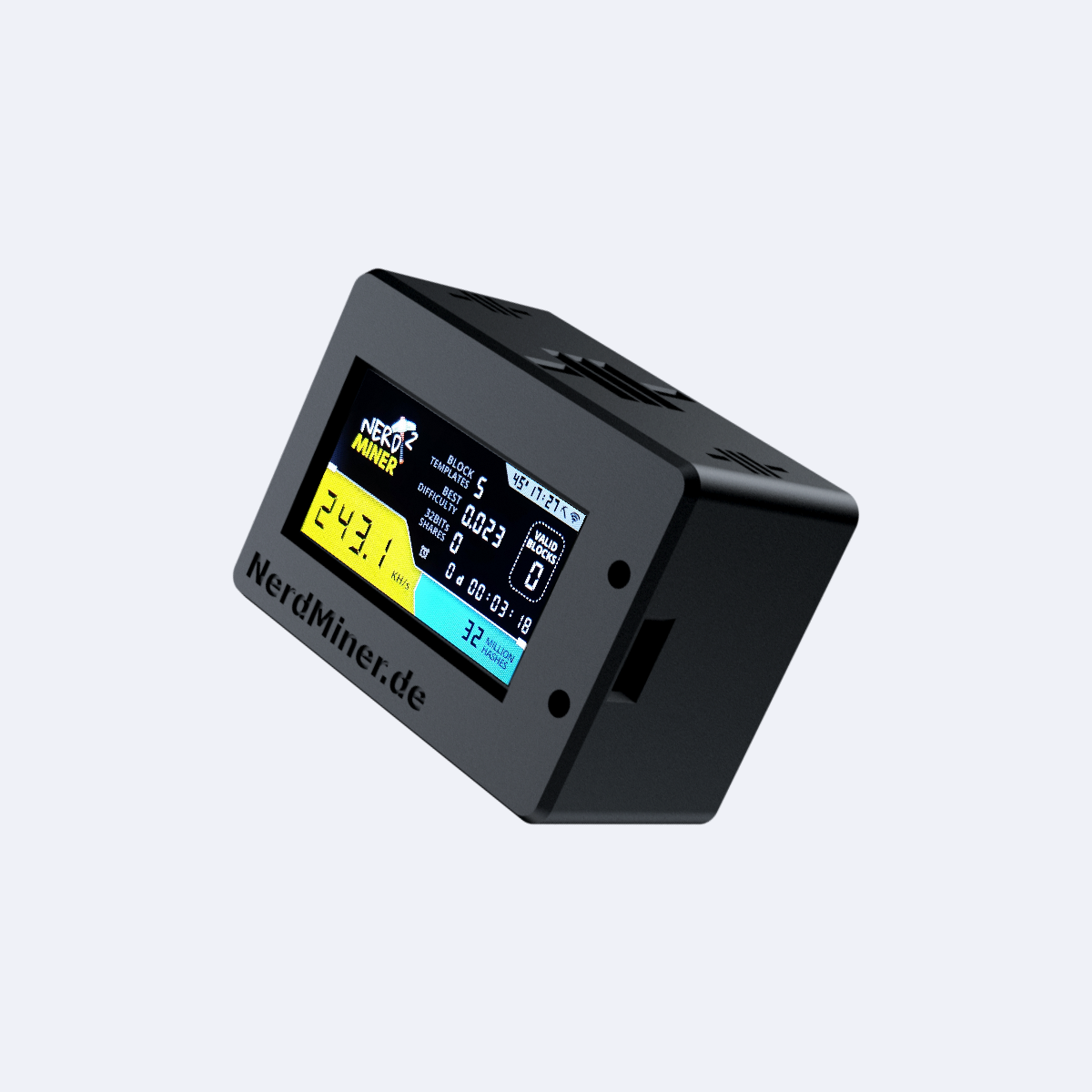
Dein Einstieg ins Bitcoin-Mining
Ob Einsteiger oder Technikbegeisterte – mit Nerdminer.de wird Bitcoin-Mining zugänglich und transparent.

Mining ist das Herzstück des Bitcoin-Netzwerks. Es sorgt dafür, dass neue Bitcoin erschaffen und Transaktionen sicher verifiziert werden, ohne das eine zentrale Autorität erforderlich ist. Wer einen gültigen Block in der Bitcoin-Blockchain findet, erhält 3.125BTC + Transaktionsgebühren.

Die vier Grundpfeiler des Bitcoin-Minings
Rechenleistung & Hashrate
Rechenleistung & Hashrate
Die Hashrate beschreibt, wie viele Rechenoperationen pro Sekunde von deinem Bitcoin-Miner ausführt werden. Je höher die Hashrate, desto mehr Chancen hat ein Gerät, einen gültigen Block mit 3.125 Bitcoin zu finden. Nerdminer-Geräte bieten je nach Modell unterschiedlich hohe Hashraten – angepasst auf deine Bedürfnisse.
Dezentralität & Sicherheit
Dezentralität & Sicherheit
Jeder Bitcoin-Miner unterstützt die Sicherheit und Unabhängigkeit des Bitcoin-Netzwerks. Durch die weltweite Verteilung von Minern kann niemand das System kontrollieren oder manipulieren. Mit Nerdminer.de wirst du Teil dieses dezentralen Rückgrats der Zukunft.
Blockreward & Anreizsystem
Blockreward & Anreizsystem
Als Belohnung für die Rechenleistung erhalten Miner aktuell 3,125 Bitcoin pro gefundenem Block – plus Transaktionsgebühren. Mit deinem Bitcoin-Miner erhältst du die Chance auf deinen eigenen Block-Reward.
Energieeffizienz & Stromverbrauch
Energieeffizienz & Stromverbrauch
Bitcoin-Mining benötigt Strom – doch Nerdminer.de entwickelt Geräte mit besonders niedrigem Stromverbrauch und hoher Effizienz.
Welcher Held passt zu deiner Story?

The Titan
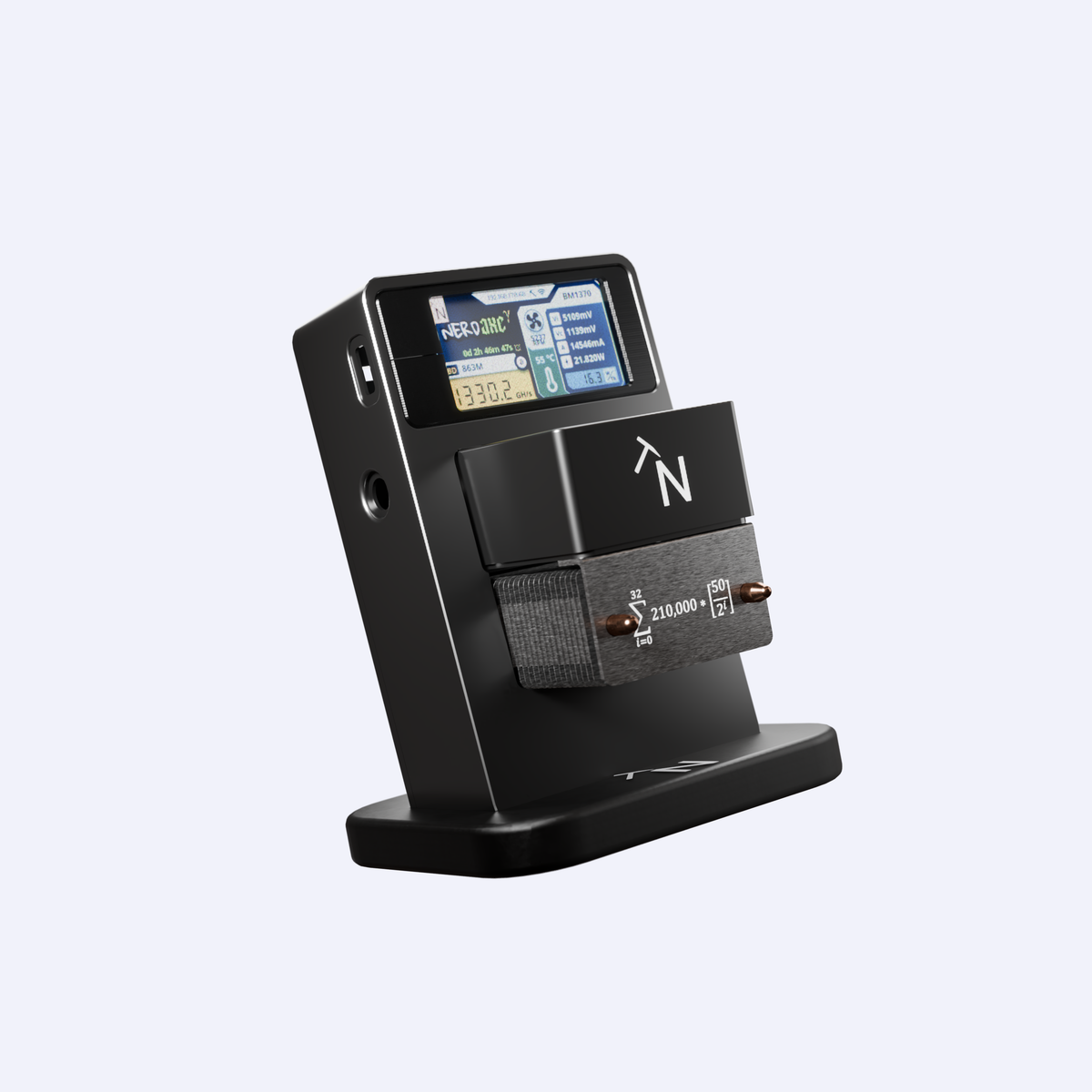
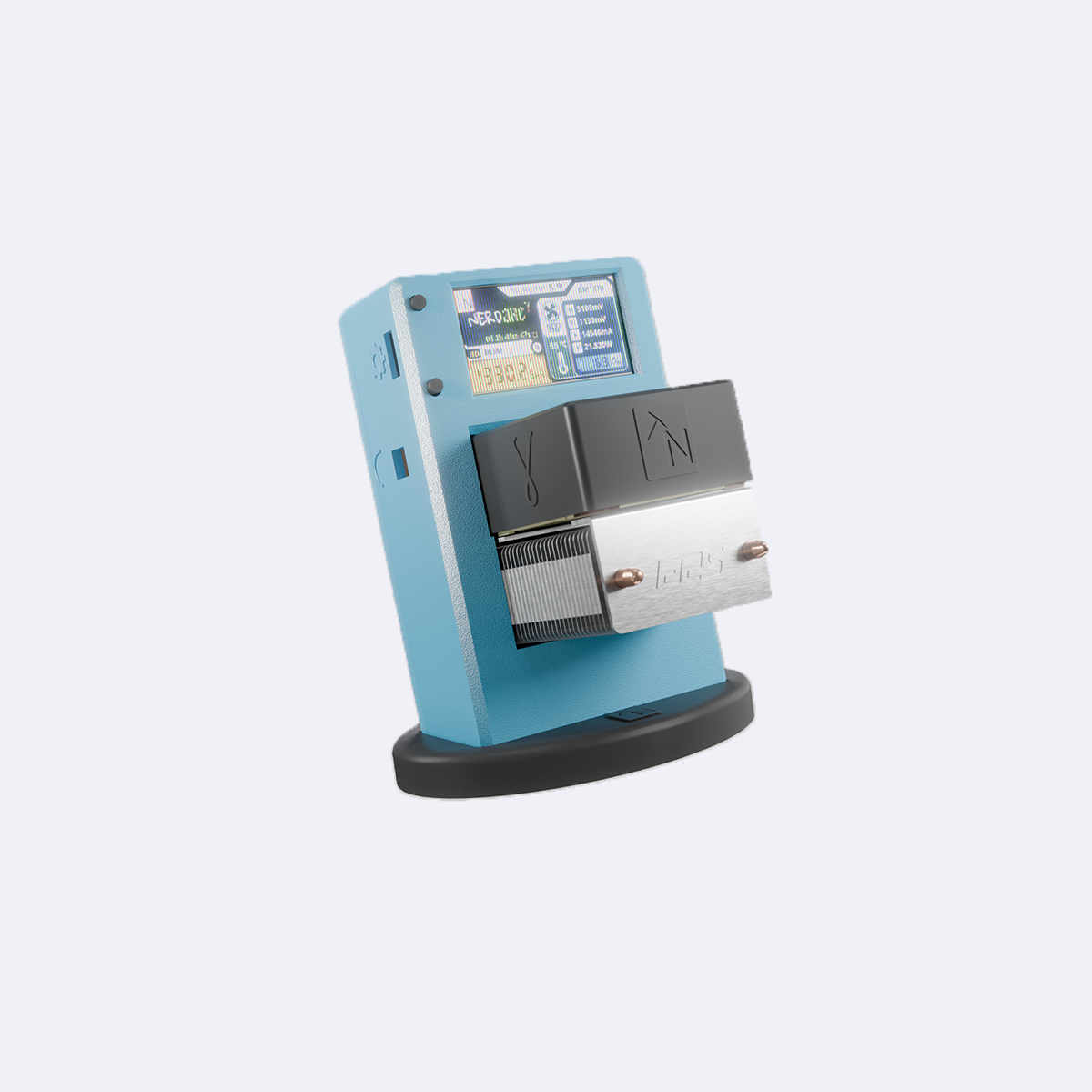
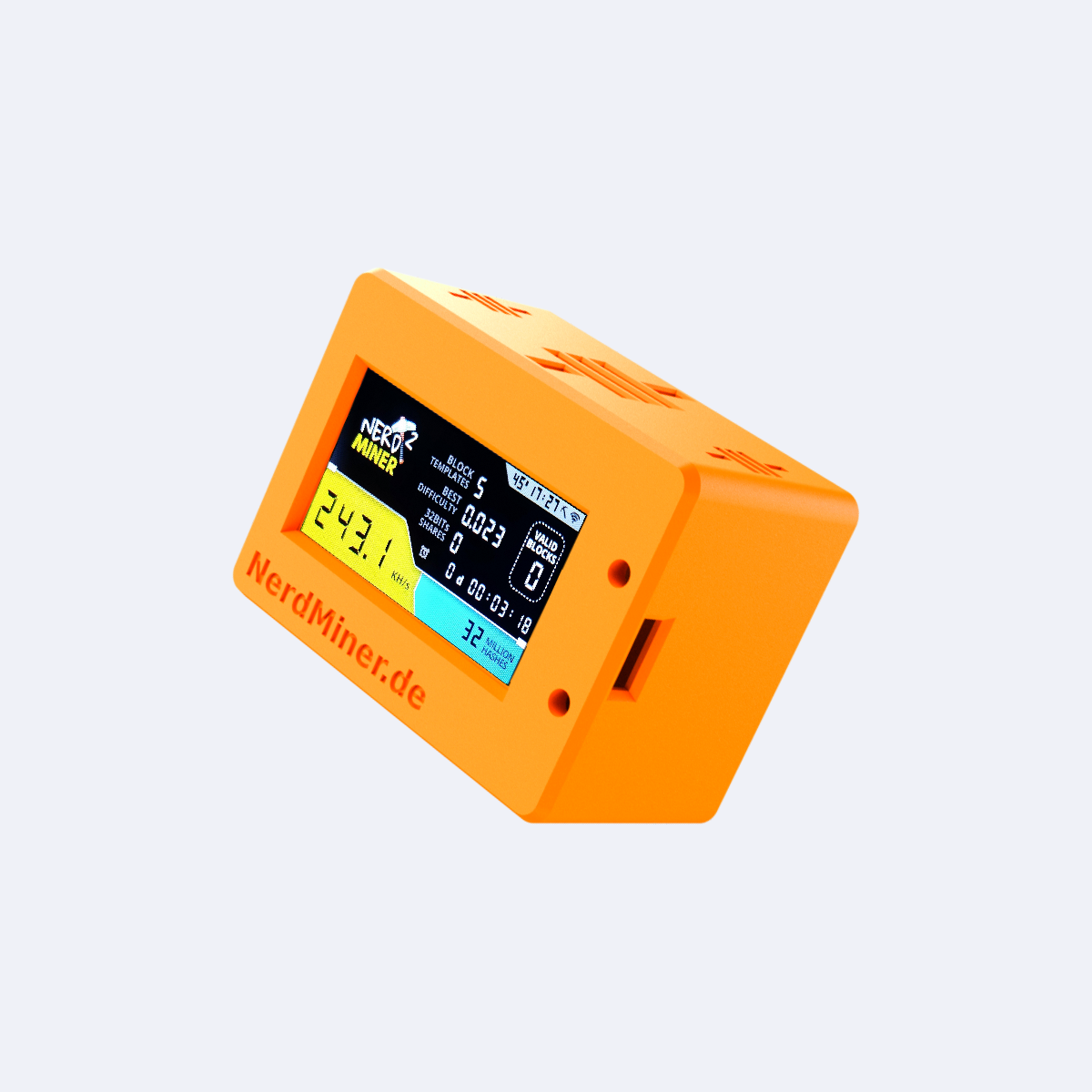
Der Gamma ist das neue Kraftpaket im Nerdminer-Universum – kompromisslos stark, technisch überlegen und bereit für deine Mining-Revolution.
Der Titan. Die neue Generation. Stärker. Kühler. Schneller.
Produkt
Produkt


The Scout
Der Classic ist der Erste, der auf dem Schlachtfeld erscheint. Klein, flink, bereit – dein Scout ins Mining-Universum.
Der Aufklärer. Schnell. Clever. Bereit.

The Speedster
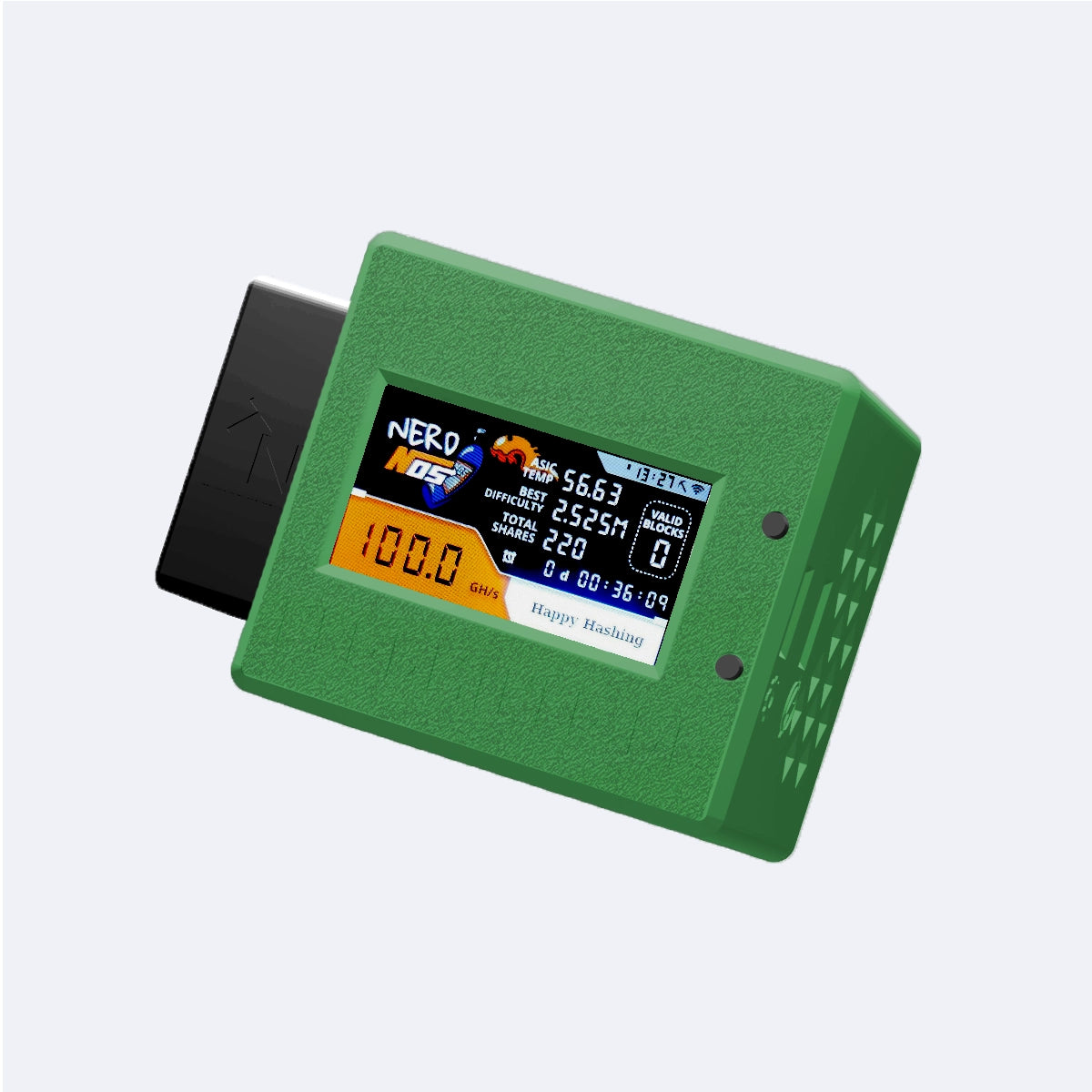
Wenn andere noch hochfahren, hat er schon den ersten Block im Visier. Der NerdNOS beschleunigt dein Mining mit Nitro-Power.
Der Tuner. Der Sprintkönig. Der Nerd mit Nitro.
Produkt

NerdNOS - the world novelty with 80GH/s
Produkt

The Guardian
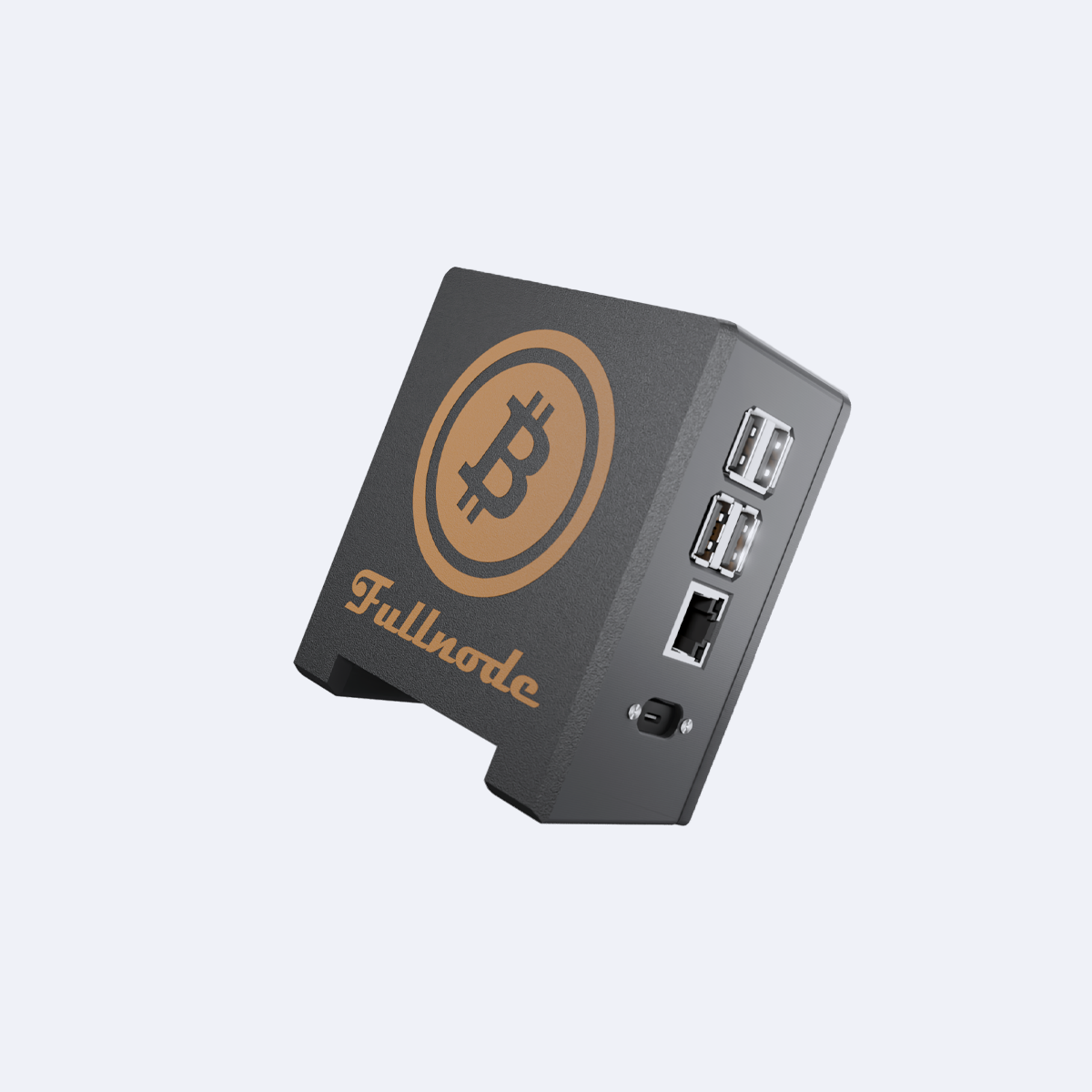
Er kämpft nicht direkt, aber ohne ihn geht nichts. Die Fullnode ist dein Tor zur vollen Kontrolle im Bitcoin-Netzwerk – für maximale Souveränität und Datenschutz.
Der Beschützer. Der Bewahrer. Die Seele des Netzwerks.

The Strategist
Vier Displays. Volle Kontrolle. Der Giga Nerdminer macht deine Mining-Farm zum Strategielabor.
Der Multi-Dashboard-Master. Weitblick statt Wahnsinn.

Produkt


Produkt


The Tank
Wenn du richtig angreifen willst, brauchst du den NerdAxe. Er ist die Mining-Waffe deiner Wahl – stark, stabil, kompromisslos.
Der Muskelprotz. Stabil. Stark. Unerschütterlich.

The Visionary
Für ihn zählt nicht nur Leistung, sondern auch Stil. Der Visionary zeigt, dass Bitcoin-Mining effizient und elegant zugleich sein kann.
Der Ästhet. Der Alleskönner. Der Blickfänger.

Produkt

Blog posts

The story of the creation of Bitcoin
The emergence of Bitcoin is closely linked to the banking crisis of 2008 and the early ideas of the so-called cypherpunks for digital cash. The combination of these two factors contributed significantly to the creation of Bitcoin. The banking crisis of 2008: The banking crisis of 2008 was one of the worst financial crises in modern history. It was triggered by a combination of risky lending practices, real estate bubbles and a lack of regulation. As a result of this crisis, many people around the world have been confronted with the shortcomings of the traditional financial system, which was controlled by a few banks and governments. The role of the cypherpunks and the emergence of Bitcoin: The cypherpunk movement emerged at the beginning of the 1990s, when some libertarians and freedom-loving cryptographers and computer scientists such as Timothy May, Eric Hughes and John Gilmore began to meet on a monthly basis for a kind of get-together. The meetings consisted of discussions on various aspects of cryptography. The group's ideas culminated in "A Cypherpunk's Manifesto", a manifesto by and for cypherpunks, written by founding member Eric Hughes. A must-read for anyone trying to understand the philosophies of the cypherpunks. The cypherpunks' meetings eventually led to a mailing list. This now legendary mailing list already used the early Internet or emails. The mailing list grew significantly in the following years. Well-known personalities such as Julian Assange, Hal Finney (the first recipient of a Bitcoin transaction) and Adam Back (the first person to know about Bitcoin - apart from the inventor himself) joined the list. The discussions between group members always varied. Concerns about online privacy were commonplace, with the possibility of a burgeoning Big Brother state the greatest fear of some cypherpunks. There were also further philosophical debates and of course the exchange of ideas for a decentralized currency on or through the Internet. The release of the Bitcoin white paper: When the user with the pseudonym “Satoshi Nakamoto” also published his famous white paper entitled: “Bitcoin: A Peer-to-Peer Electronic Cash System” on the Cypherpunk mailing list in October 2008, shortly after the height of the banking crisis, he pulled initially received a lot of criticism from skeptics. Satoshi Nakamoto continued and, despite all the critics, he mined the very first Bitcoin block on January 3rd, 2009. Since this day, the Bitcoin blockchain has been running continuously. In the first block of Bitcoin, the so-called genesis block, there was the headline: "The Times 03/Jan/2009 Chancellor on brink of second bailout for banks." This headline is from the front page of the British newspaper "The Times" on January 3, 2009. It was inserted into the genesis block by Satoshi Nakamoto and served as a kind of timestamp that gives the context of the creation of Bitcoin in connection with the banking crisis and the associated massive expansion of the money supply in 2008. The white paper presented a solution to the problems of the traditional financial system by describing a decentralized peer-to-peer payment system based on cryptography. Previous attempts at digital cash: Before the emergence of Bitcoin, there were several attempts to develop electronic cash. Some of these attempts were more experimental and did not have a major impact, while others attracted some attention but were ultimately unsuccessful. Here are some of the notable examples: 1. E-Gold (1996): E-Gold was one of the first successful electronic payment systems, allowing users to buy, sell and transfer gold. Founded in 1996 by Douglas Jackson and Barry Downey, it was based on a reserve of physical gold held on behalf of users. Although E-Gold was successful in its early years, it was later shut down due to abuse for illegal activities. 2. HashCash (1997): HashCash was developed by Adam Back as a means to combat email spam by using a proof-of-work mechanism. However, it was also intended as an electronic payment system. HashCash later inspired Bitcoin's proof-of-work mechanism. 3. B Money (1998): Proposed by Wei Dai, B-Money was a theoretical concept for a decentralized digital currency. It was based on cryptographic techniques and a peer-to-peer network similar to Bitcoin. 4. Bit Gold (2005): Bit Gold was a concept for a digital currency based on cryptographic techniques and a decentralized protocol proposed by Nick Szabo. Although Bit Gold was never implemented, it is often considered a precursor to Bitcoin. These projects laid the foundation for the development of Bitcoin by exploring various concepts and ideas to create a decentralized digital currency. Satoshi once commented on these projects by saying, "Many people automatically reject electronic currencies as a lost cause because of all the failures of the companies since 1990. I hope it is obvious that the reason for this was the centrally controlled nature of these projects that they were doomed to fail." Bitcoin ultimately combined many of the ideas from these early concepts and brought them together in a uniformly functioning, open-source system that was accessible to everyone. In 2011, Satoshi's last sign of life was finally noticed. "I've moved on to other things," Satoshi wrote to software developer Mike Hearn on April 23, 2011. After that, Satoshi disappeared and became a myth. The creation of Bitcoin as a response to the crisis: The banking crisis of 2008 ultimately served as a catalyst for the creation of Bitcoin. The combination of the flaws of the traditional financial system and the ideas of cypherpunks fighting for freedom led to the creation of an alternative currency. No central entity, no elite, no government in the world, no matter how powerful, is able to control Bitcoin. Anyone can view the code and check for errors. Anyone can develop and operate Bitcoin. Bitcoin is everyone's money, freedom money. Bitcoin was born as a response to the crisis, with the aim of creating a transparent, secure, decentralized form of digital cash with a limited supply of 21 million Bitcoins. Since its creation, Bitcoin has stood for freedom of the individual, personal responsibility and privacy on the Internet. Discover your Bitcoin miner for home
Learn more
The 20 most important terms in Bitcoin
Bitcoin is on everyone's lips, but getting started can be confusing with a variety of technical terms. Here are the 20 most important terms that beginners should know: 1. Blockchain: A decentralized and distributed database that stores transactions securely and transparently. 2. Cryptocurrency: A digital or virtual currency that uses cryptographic techniques for its security. 3. Bitcoin: The first and most famous cryptocurrency, introduced by Satoshi Nakamoto in 2009. Also the only decentralized cryptocurrency. 4. Altcoin: Any cryptocurrency other than Bitcoin, such as Ethereum, Ripple and Litecoin. Altcoins represent centralized or distributed networks, which, however, do not fulfill the aspect of decentralization, as a central entity always manages the network. 5. Bitcoin Wallet: A digital wallet that allows storing, sending and receiving Bitcoin. 6. Bitcoin Mining: The process in which, on the one hand, the Bitcoin network is secured and, on the other hand, new Bitcoin are created by applying energy. 7. Hash: A cryptographic function that converts data into a specified string and is used to secure information on the blockchain. 8. Smart Contracts: Self-executing contracts based on the blockchain that are automatically executed when certain conditions are met. 9. ICO (Initial Coin Offering): A financing method in which new cryptocurrencies are introduced by selling tokens to investors. 10. Fork: The fork of an existing blockchain that leads to a new version, such as hard forks and soft forks (example Bitcoin Cash) 11. Private Key: A secret key that allows one to access their cryptocurrencies and authorize transactions. 12. Public Key: A public key that allows others to send cryptocurrencies to a specific wallet. 13. Exchange: A platform where cryptocurrencies can be bought, sold or exchanged. 14. All-time high: All-time high of the price of a cryptocurrency in fiat currencies. 15. Stacking Sats: Regular saving in Bitcoin, e.g. in the form of a weekly or monthly savings plan. 16. Bitcoin Whale: An individual or group that owns a significant amount of Bitcoin and can thereby exert an influence on the price. 17. FOMO (Fear of Missing Out): The fear of missing out on a lucrative opportunity, which often leads to impulsive investment decisions. 18. Market Cap: The total value of all units of a cryptocurrency in circulation. 19. Fiat currencies: The current government-run inflationary currencies such as the dollar or euro. 20. Hardware wallet: A wallet that is not connected to the Internet and is therefore protected from hacker attacks (e.g. the Bitbox). With these basic concepts you will be better equipped to dive into the fascinating world of Bitcoin. Become a Bitcoin miner now
Learn more
An introduction to Bitcoin mining: How does it work and why is it important?
How does Bitcoin mining work?1. Collect transactions: First, the network collects unconfirmed transactions in a so-called "mempool". When a user sends a transaction, the transaction ends up in this mempool. It is comparable to a queue.2. Formation of blocks: Miners select transactions from the mempool and group them into a block. For economic reasons, they always select the transactions that generate the most fees.3. Reward for miners: Miners are rewarded for their energy expenditure with new Bitcoin. This is the mechanism that brings new Bitcoin into circulation. From 2009 to 2012 it was 50 Bitcoin per block, 2012-2016 25 Bitcoin, 2016-2020 12.5 Bitcoin, 2020-2024 6.25 Bitcoin and since the halving in April 2024 only 3.125 Bitcoin. This represents Bitcoin's monetary inflation, which was around 1.6% before the halving in 2024 and has halved to 0.8% since the halving, meaning that inflation is now lower than it is for gold.Challenges and future prospectsBitcoin miners are faced with the dilemma that halving reduces their turnover by 50% every four years. This indirectly forces miners to constantly reduce their costs as much as possible in order to achieve maximum efficiency.The biggest items are electricity consumption and hardware costs. Halving every four years means that miners are always on the lookout for cheaper electricity, which can primarily be found in unpopulated areas of the world through surplus energy, i.e. electricity that would otherwise not be purchased by anyone. ConclusionBitcoin mining is a fascinating process that ensures the integrity of Bitcoin.Discover your Nerdminer
Learn more